
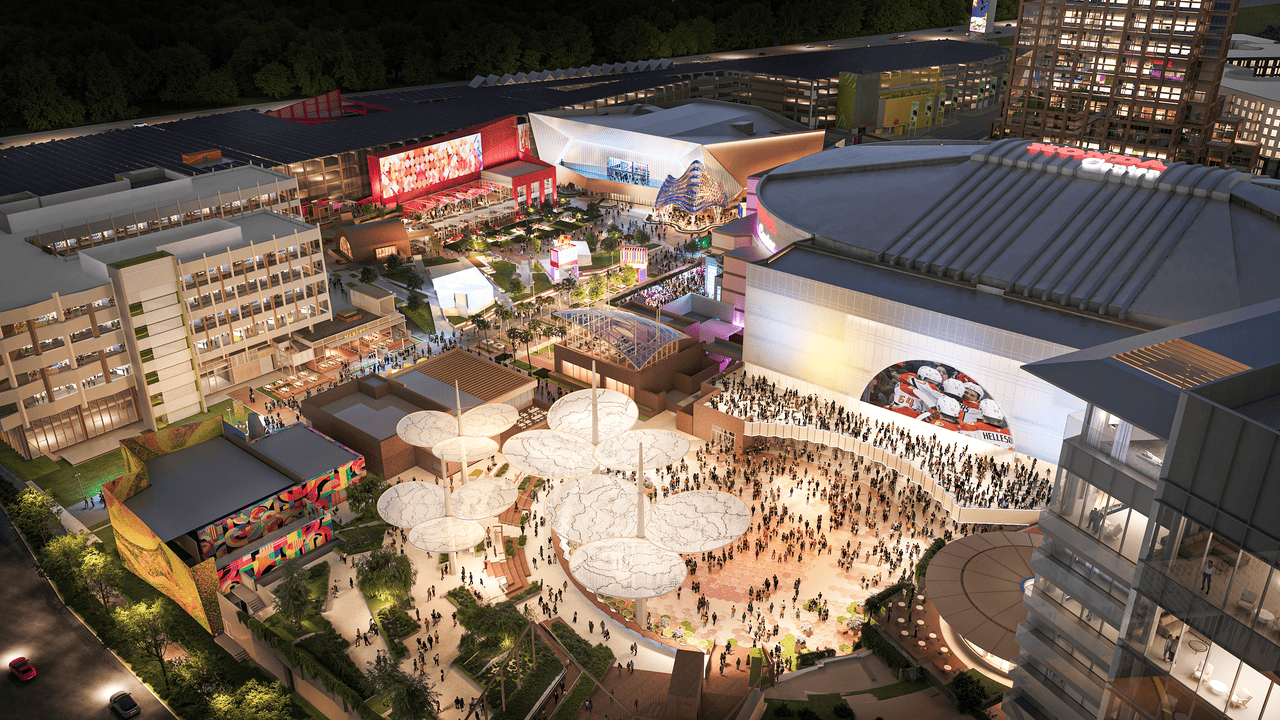
From Arenas to Neighborhoods: How Sports Is Driving a New Generation of Mixed-Use Development
How can communities draw far-reaching, long-term value from sports venues? Cities and sports teams are rethinking the traditional stadium model. Instead of parking-lot-ringed venues that sit empty much of the year, developments like The Battery Atlanta and Milwaukee’s Deer District are creating vibrant destinations that bring people together year-round.
Across North America, 107 sports-anchored mixed-use developments are open, under construction, or planned, at a combined cost of about $262 billion. Sports teams are increasingly leading these projects, and public funding has dropped from 13.5% to 5.5% among recently completed projects.
This past Wednesday, October 28, 2026, Visit Anaheim, in partnership with OCVIBE, released a white paper with research that explores how arenas and stadiums are evolving into vibrant neighborhoods, using OCVIBE as a case study in how private investment can help transform the areas surrounding sports venues into connected, year-round destinations.
The white paper shares how the Samueli family is investing $5 billion in private funds to remake nearly 100 acres around the Honda Center by 2033. Plans include replacing 62 acres of surface parking with 20 acres of open space, adding a 5,000-seat concert hall, more than 2,000 residences, and chef-driven dining destinations. A pedestrian bridge will also connect the district to the transportation hub known as ARTIC.
With 26.5 million annual visitors to the Anaheim area, OCVIBE is turning an already popular metropolitan area into a more connected community hub.